
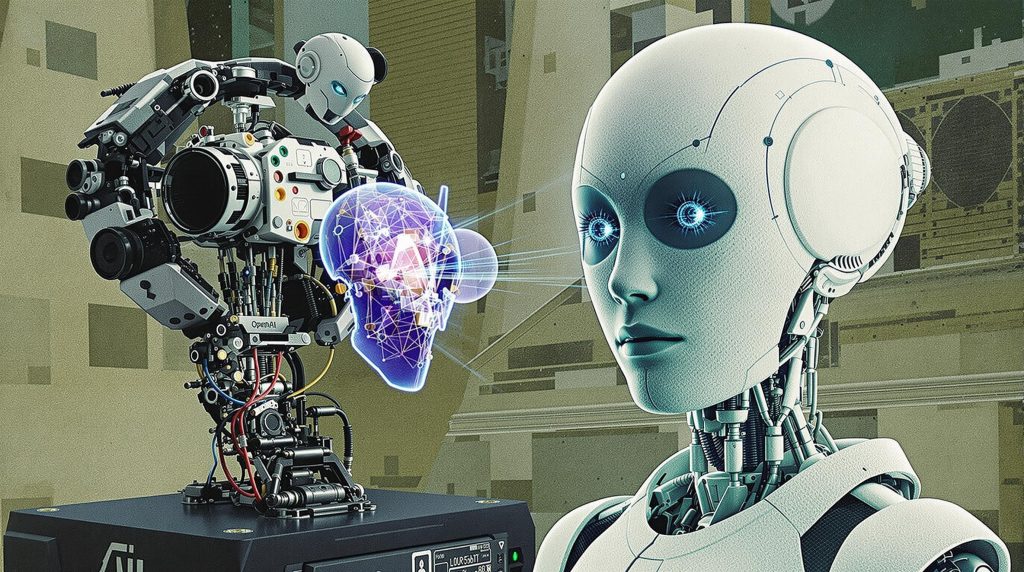
The artificial intelligence revolution is no longer a distant promise—it’s unfolding before our eyes, transforming everything from how we work to how we think about human potential. But as we stand at this technological crossroads, one critical question emerges: are we truly prepared for the AI future that’s already here?
The landscape of artificial intelligence is shifting at breakneck speed, with developments that seemed like science fiction just months ago now becoming everyday reality. Three pivotal breakthroughs are particularly reshaping our understanding of what’s possible, each carrying profound implications for society, business, and the very nature of human-AI collaboration.
Breakthrough Technologies: The New Frontier of AI Reasoning
OpenAI’s latest O3 Pro model represents a quantum leap in artificial intelligence capabilities, introducing unprecedented reasoning abilities that are redefining what we thought possible in machine intelligence. Unlike previous iterations that excelled primarily at pattern recognition and text generation, O3 Pro demonstrates sophisticated logical thinking that rivals human cognitive processes.
This advancement isn’t merely about processing power—it’s about qualitative intelligence enhancement. The model can tackle complex scientific problems, navigate nuanced business scenarios, and adapt educational content with a level of sophistication that was unimaginable just years ago. From accelerating drug discovery to revolutionizing personalized learning, O3 Pro is pushing the boundaries of AI application across critical sectors.
The implications extend far beyond technical specifications. We’re witnessing the emergence of AI systems that don’t just assist human decision-making but can engage in genuine problem-solving partnerships. This shift from tool to collaborator represents a fundamental change in how we conceptualize the relationship between human and artificial intelligence.
Collaborative AI Systems: Redefining Team Dynamics
Google’s Mass framework introduces another paradigm shift: synchronized AI agents working together autonomously to optimize and execute complex tasks. This isn’t about replacing human teams—it’s about creating hybrid ecosystems where AI agents collaborate seamlessly, handling routine optimization while freeing humans to focus on strategic, creative, and interpersonal work.
The Mass framework eliminates the traditional bottleneck of micromanagement by enabling AI systems to self-coordinate and adapt in real-time. Imagine project management where deadlines adjust automatically based on resource availability, or supply chains that optimize themselves continuously without human intervention. This level of autonomous collaboration was theoretical until now.
What makes this development particularly significant is its potential to democratize high-level operational efficiency. Small businesses could access the same sophisticated coordination capabilities as large corporations, leveling the playing field in ways we’re only beginning to understand. The framework suggests a future where the size of your human team matters less than the intelligence of your collaborative systems.
Rising Ethical Considerations: The Human-Centric Imperative
As AI capabilities expand exponentially, so does the urgency of addressing ethical implications and societal alignment. The question is no longer whether AI will impact society, but whether we can ensure that impact serves human flourishing rather than undermining it.
Current ethical considerations span from immediate concerns about job displacement and privacy to deeper questions about human agency and the nature of consciousness. As AI systems become more sophisticated, we must grapple with issues of algorithmic bias, transparency, and accountability. Who is responsible when an AI system makes a mistake? How do we ensure that AI development serves diverse global communities rather than reinforcing existing inequalities?
The challenge isn’t just technical—it’s fundamentally about values. As we integrate AI more deeply into healthcare, education, justice systems, and governance, we must ensure these technologies reflect our highest aspirations for human society. This requires ongoing dialogue between technologists, ethicists, policymakers, and communities worldwide.
Beyond the Hype: Practical Implications for Today
While these developments are revolutionary, their true impact lies in practical applications that are already beginning to transform daily life. Healthcare professionals are using advanced AI reasoning to accelerate diagnosis and treatment planning. Educators are leveraging collaborative AI systems to provide personalized learning experiences at scale. Businesses are implementing ethical AI frameworks to ensure their innovations serve stakeholder interests responsibly.
The key to navigating this transformation successfully lies in thoughtful adoption rather than reactive implementation. Organizations and individuals who take time to understand these technologies’ capabilities and limitations, while actively engaging with their ethical implications, will be best positioned to harness their benefits.
Looking Forward: The Conversation Continues
The AI revolution extends far beyond technological advancement—it’s about reimagining human potential and societal structures. As these breakthrough technologies, collaborative systems, and ethical frameworks continue evolving, our readiness will be determined not by our ability to adopt new tools, but by our wisdom in shaping their development and deployment.
The future of AI is not predetermined. It will be shaped by the choices we make today about how we develop, deploy, and govern these powerful technologies. The question isn’t whether we’re ready for the AI future—it’s whether we’re actively participating in creating the AI future we want to see.
What aspects of this AI transformation do you find most compelling or concerning? The conversation about our AI future requires diverse voices and perspectives—because the decisions we make today will define the world we live in tomorrow.