
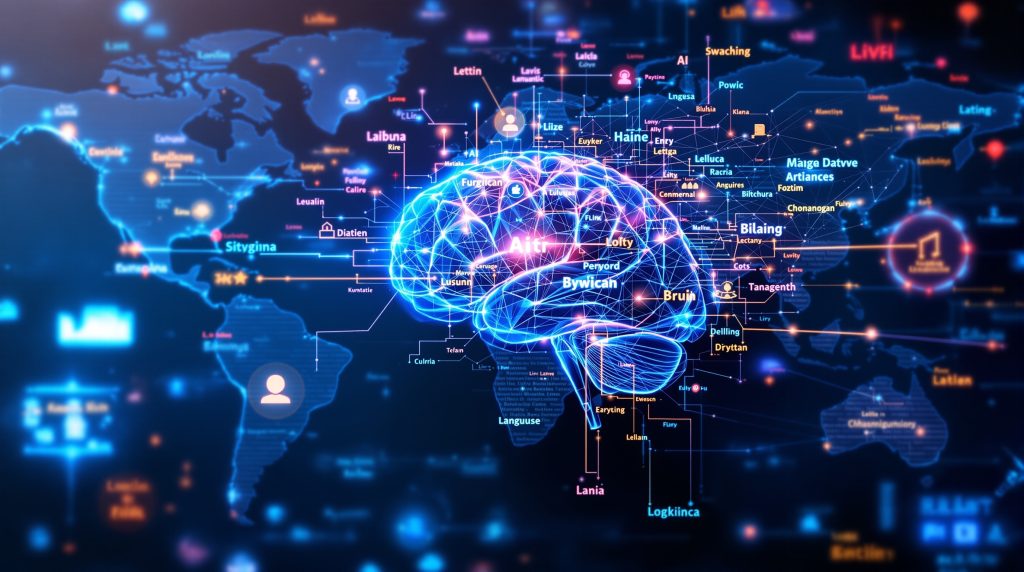
🚀 AI is Not the Future—It’s Already Here!
We’re no longer waiting for the artificial intelligence revolution – we’re living in it. Every day, AI technologies are quietly transforming how we work, communicate, and solve complex problems. What once seemed like science fiction is now seamlessly integrated into our daily lives, from the moment we wake up to our smartphone alarms to the personalized recommendations we receive before bed.
As we navigate this transformative era, it’s becoming increasingly clear that AI isn’t just another tech trend destined to fade. Instead, it’s emerging as a fundamental life-changing force that’s reshaping entire industries and redefining human potential.
🤖 Next-Level Interactivity: AI as Mental Extension
The most exciting development in AI isn’t just its computational power – it’s how intuitive and human-like these systems have become. Modern AI doesn’t simply process commands; it understands context, learns from interactions, and provides real-time, tailored advice that feels genuinely helpful.
Think about how AI assistants now anticipate your needs, offering suggestions before you even realize you need them. This represents a fundamental shift from AI as a tool to AI as an extension of our own mental capacity. Whether you’re planning a complex project, making investment decisions, or simply trying to optimize your daily schedule, AI is becoming that trusted advisor who’s always available with data-backed insights.
🔍 Data-Driven Insights: Seeing the Invisible
Perhaps nowhere is AI’s impact more profound than in how businesses approach data analysis. Organizations are drowning in information – customer behaviors, market trends, operational metrics – but AI-driven analytics are turning this data deluge into a competitive advantage.
These intelligent systems can identify patterns and correlations that would take human analysts months to discover, if they could spot them at all. Companies are now making strategic decisions based on insights that were previously invisible, gaining unprecedented foresight into market dynamics and customer needs. This isn’t just about better business intelligence; it’s about fundamentally changing how organizations understand and respond to their environment.
🌐 Global Connectivity: Breaking Down Barriers
AI is dissolving the barriers that have historically separated us. Real-time translation technologies are enabling conversations between people who speak entirely different languages, while intelligent automated systems are facilitating business relationships across continents.
This global connectivity goes beyond simple translation. AI systems are learning cultural nuances, adapting communication styles, and helping people navigate cross-cultural interactions with unprecedented ease. The result? A world that feels smaller and more interconnected, where geographic and linguistic boundaries are becoming less relevant to human collaboration and global business opportunities.
🛡️ Cybersecurity Evolution: Adaptive Defense Systems
As our digital dependence grows, so does the sophistication of cyber threats. Traditional security measures that rely on predefined rules and signatures are proving inadequate against modern attacks. This is where AI-powered cybersecurity is proving revolutionary.
These intelligent defense systems don’t just follow programmed responses – they learn, adapt, and evolve. They can identify unusual patterns of behavior, predict potential threats, and respond to attacks in real-time. Most importantly, they get smarter with each encounter, building a more robust defense against the increasingly sophisticated tactics employed by cybercriminals. This adaptive security approach is essential as we become more digitally integrated.
🌱 Championing Sustainability: Technology Meets Conservation
One of the most promising applications of AI lies in addressing our planet’s most pressing challenges. From environmental monitoring to resource optimization, AI is providing tools that were previously impossible to imagine.
Intelligent systems are tracking deforestation in real-time, predicting climate patterns with increasing accuracy, and optimizing energy consumption across entire cities. AI is helping farmers maximize crop yields while minimizing environmental impact, and it’s enabling more efficient supply chains that reduce waste and carbon emissions. This represents a powerful convergence of technological advancement and environmental responsibility.
The Reality of Living in an AI World
What makes this moment in history so remarkable isn’t just the capabilities of these technologies – it’s how naturally they’re becoming part of our daily experience. We’re not waiting for AI to arrive; we’re adapting to a world where artificial intelligence is already integral to how we live and work.
The question isn’t whether AI will change our future – it’s how we’ll shape and direct these changes to benefit humanity. As these technologies continue to evolve, our role becomes less about predicting what AI might do and more about ensuring it develops in ways that enhance human potential and address our most significant challenges.
💡 Your Thoughts? Which of these AI advancements resonates most with your daily experience? How are you seeing artificial intelligence impact your work, relationships, or community? The conversation about AI’s role in our world is just beginning, and every perspective matters as we navigate this transformative era together.