
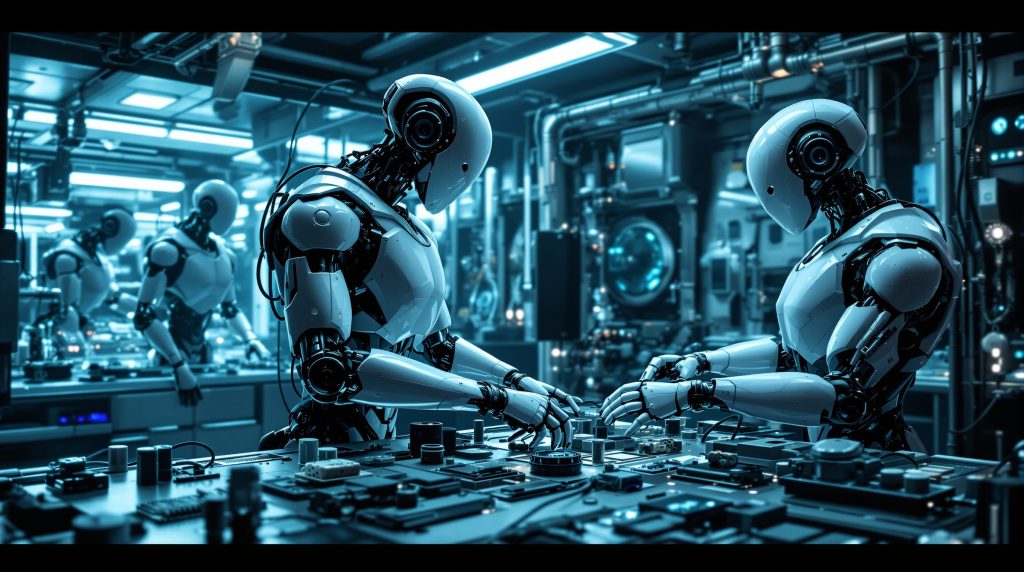
China’s ambitious push into artificial intelligence and robotics is not merely a technological pursuit—it represents a fundamental shift in global power dynamics that could reshape international relations, military capabilities, and economic hierarchies by 2030. As the nation positions itself at the forefront of this technological revolution, the world watches with both fascination and concern at the implications of China’s robotic leap.
The Strategic Foundation of China’s Technological Dominance
China’s approach to AI and robotics development differs markedly from other global powers through its coordinated national strategy. Unlike fragmented efforts seen elsewhere, China has orchestrated a unified vision that aligns government policy, academic research, and private sector innovation. This tri-sector collaboration has created an ecosystem where resources flow seamlessly between universities, tech companies, and state institutions, accelerating development timelines and maximizing technological breakthroughs.
The nation’s commitment is evident in its substantial financial investments and policy frameworks designed to nurture innovation. From establishing AI research institutes to providing tax incentives for robotics companies, China has created an environment where technological advancement is both encouraged and rewarded. This systematic approach has already yielded impressive results, with China leading global patent filings in AI-related technologies and producing robots at unprecedented scales.
Revolutionary Advances in Humanoid Robotics
The development of sophisticated humanoid robots like Shanghai’s Bumblebee model represents more than technological achievement—it signals a transition from laboratory curiosities to practical, deployable systems. These robots demonstrate capabilities that were science fiction just decades ago, including adaptive movement across varied terrains, real-time environmental assessment, and autonomous decision-making.
What makes these developments particularly significant is their potential for dual-use applications. While presented as innovations for industrial or civilian purposes, the same technologies that enable a robot to navigate a factory floor can be adapted for military reconnaissance or battlefield deployment. This versatility makes humanoid robotics a critical component of national security infrastructure, blurring the lines between civilian technological advancement and military capability enhancement.
Autonomous Warfare and Strategic Implications
Perhaps the most concerning aspect of China’s robotic advancement lies in its military applications. The integration of AI into warfare systems, including autonomous drone swarms and intelligent defense systems, represents a paradigm shift in how conflicts might be conducted. These technologies promise unprecedented precision and efficiency while potentially reducing human casualties on the deploying side—though raising serious questions about civilian protection and escalation control.
The development of AI-powered anti-submarine systems and autonomous aerial platforms suggests that China is not merely seeking technological parity but aims to establish technological superiority in critical military domains. This advancement could alter the balance of power in regions like the South China Sea, where technological advantages might translate directly into strategic control.
Global Power Dynamics in Transition
China’s robotic leap is fundamentally altering international relationships and strategic calculations. Nations that previously relied on conventional military advantages or economic leverage now face the prospect of technological obsolescence. This shift is creating new alliances and partnerships, as countries seek to either collaborate with or compete against China’s technological capabilities.
The economic implications are equally profound. Industries worldwide may find themselves dependent on Chinese robotics technology, creating new forms of economic interdependence or vulnerability. Countries that fail to develop their own capabilities or secure reliable partnerships may find themselves at a significant disadvantage in both economic competitiveness and national security.
Ethical Considerations and International Governance
The rapid advancement of autonomous military systems raises fundamental questions about accountability, ethics, and international law. When an autonomous system makes a lethal decision, who bears responsibility—the programmer, the commander, or the state that deployed it? These questions become more pressing as systems become more sophisticated and independent in their decision-making processes.
Current international frameworks for regulating autonomous weapons are inadequate for the technological realities emerging from China’s development programs. The lack of comprehensive international agreements on AI warfare creates a regulatory vacuum that could lead to uncontrolled proliferation of autonomous weapons systems, potentially lowering the threshold for armed conflict.
The Path Forward: Challenges and Opportunities
As China continues its robotic advancement, the international community faces critical decisions about how to respond. Some nations are investing heavily in their own AI and robotics programs, creating a competitive dynamic that could accelerate innovation but also increase instability. Others are calling for international cooperation and regulation to ensure these technologies serve humanity’s broader interests rather than narrow national advantages.
The ultimate impact of China’s robotic leap on global power dynamics will depend not only on the technologies themselves but on how the international community chooses to engage with these developments. Whether this leads to a new form of technological cold war or collaborative advancement toward shared benefits remains an open question—one that will likely define the geopolitical landscape for decades to come.
The transformation is already underway, and its effects will ripple through every aspect of international relations, from trade and diplomacy to security and warfare. Understanding and adapting to this new reality may well determine which nations thrive in the emerging technological order and which find themselves left behind in an increasingly automated world.