
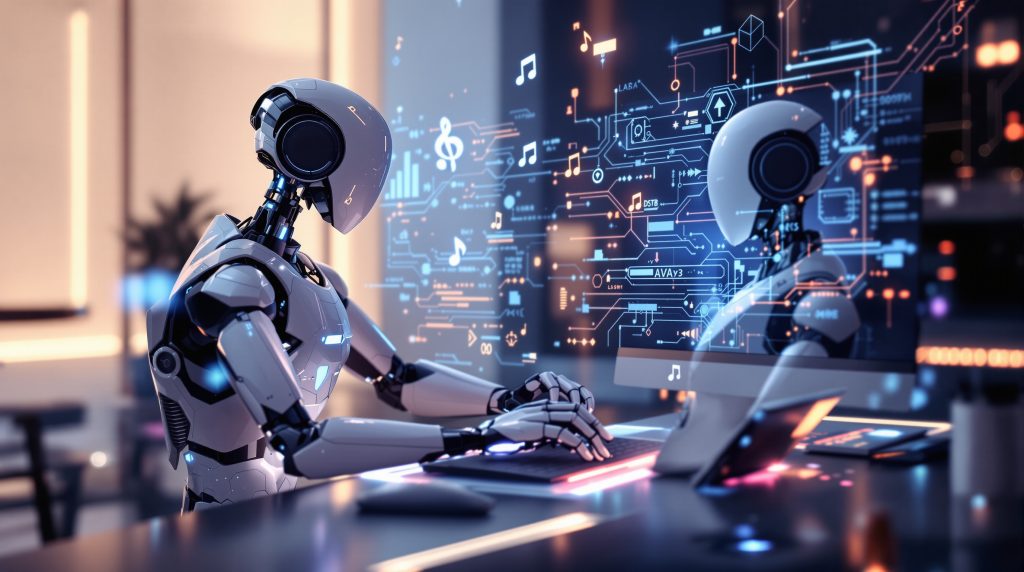
The workplace revolution is no longer a distant future—it’s happening now. As artificial intelligence continues its rapid evolution, autonomous AI agents are poised to fundamentally transform how we work, collaborate, and innovate. But the critical question remains: are organizations and workers truly prepared for this seismic shift?
The Dawn of Intelligent Automation
Today’s AI landscape is witnessing unprecedented breakthroughs that promise to reshape professional environments across industries. These aren’t just incremental improvements—they represent a fundamental reimagining of what’s possible when intelligent systems become our collaborative partners rather than mere tools.
The emergence of sophisticated AI agents signals a transition from reactive technology to proactive digital colleagues capable of understanding context, learning from interactions, and executing complex tasks with minimal human oversight. This evolution raises both exciting possibilities and important considerations about the future of work.
Game-Changing Developments Reshaping Workflows
Centralized AI Management has become a reality with innovations like OpenAI’s Codeex platform. This breakthrough allows developers to orchestrate multiple AI agents simultaneously through a unified interface, dramatically streamlining project management workflows. The result? Software development cycles that are not only faster but more cohesive, as teams can coordinate diverse coding tasks without the complexity of managing separate AI systems.
Economic accessibility is being revolutionized through cost-efficiency breakthroughs. Anthropic’s anticipated Claude Sonnet 5 update could slash inference costs by half, making advanced AI capabilities accessible to organizations of all sizes. This democratization of AI technology means that sophisticated automation tools are no longer reserved for tech giants with unlimited budgets.
The challenge of consistency in AI outputs is being addressed through structured workflow solutions like Google’s Conductor system. By maintaining persistent context directories, these platforms ensure predictable, reliable results that transform AI interactions from sporadic exchanges into sustained collaborative relationships. This reliability is crucial for mission-critical business processes.
Local inference capabilities are eliminating the traditional trade-off between performance and privacy. Solutions like Stepfun’s 3.5 Flash Model offer high-speed processing power that operates entirely within organizational boundaries, ensuring sensitive data never leaves secure environments while maintaining operational efficiency.
Navigating the Security Landscape
As AI agents become more autonomous and capable, security considerations have never been more critical. The advancement of systems like OpenClaw demonstrates both the tremendous potential and inherent risks of highly autonomous AI agents. Recent security events in the AI space underscore the necessity for robust oversight frameworks and vigilant integration protocols.
Organizations must develop comprehensive security strategies that balance innovation with protection. This includes implementing proper authentication systems, establishing clear operational boundaries for AI agents, and maintaining human oversight mechanisms that can intervene when necessary.
Preparing for the AI-Integrated Workplace
The question isn’t whether AI agents will transform workplaces—it’s how quickly organizations can adapt to harness their potential while mitigating risks. Successful integration requires more than just technological adoption; it demands cultural shifts, workforce training, and strategic planning.
Forward-thinking companies are already beginning to reimagine job roles, not as replacements for human workers, but as augmentations that amplify human capabilities. The most successful implementations will likely be those that view AI agents as collaborative partners rather than automated replacements.
The Road Ahead
The transformative potential of AI agents in workplace settings is undeniable, but readiness extends beyond technological capability. Organizations must invest in comprehensive change management, ensuring that teams are equipped not just with new tools, but with the knowledge and confidence to leverage them effectively.
As these technologies continue to mature, the competitive advantage will belong to organizations that can thoughtfully integrate AI agents while maintaining the human elements that drive creativity, empathy, and strategic thinking. The future workplace won’t be purely artificial or purely human—it will be brilliantly collaborative.
The question remains: as these powerful AI agents become increasingly sophisticated and accessible, how will your organization position itself to thrive in this new era of human-AI collaboration? The time for preparation is now, because the future of work is already at our doorstep.