
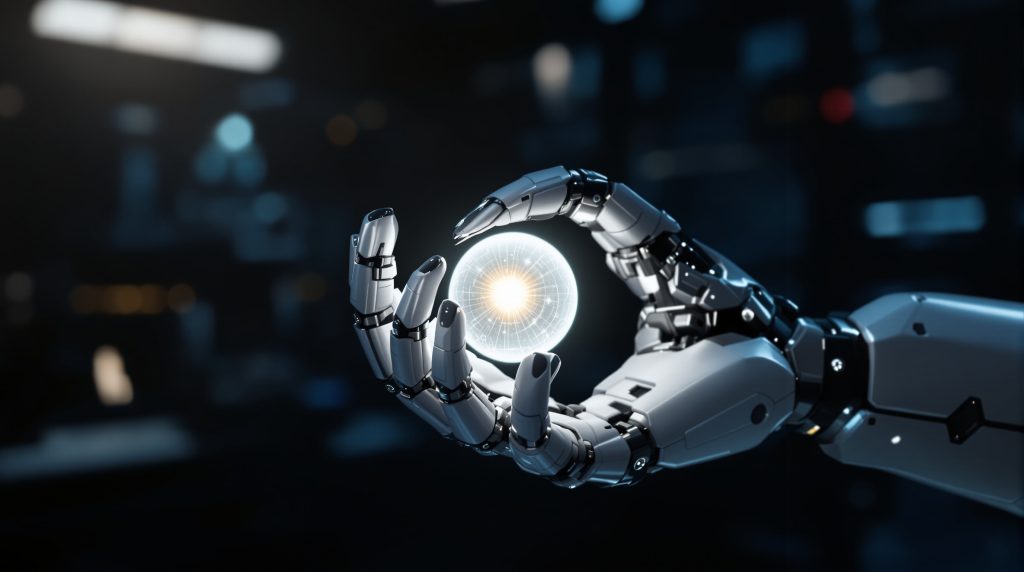
The landscape of robotics is experiencing a seismic shift with the emergence of Open Claw, a groundbreaking system that promises to fundamentally transform how robots perceive, remember, and interact with the world around them. This revolutionary technology represents more than just another incremental improvement—it’s a bold step toward creating machines with genuine cognitive capabilities that could reshape entire industries and redefine our relationship with artificial intelligence.
The Memory Revolution: Spatial Agent Intelligence
At the heart of Open Claw lies its most transformative feature: Spatial Agent Memory. This sophisticated system enables robots to construct persistent, searchable memory models from real-world data, fundamentally changing how machines understand and interact with their environment. Unlike traditional robotic navigation systems that simply map coordinates and obstacles, Open Claw creates a rich, contextual understanding of space and objects.
This breakthrough means robots can remember not just where they’ve been, but what they’ve encountered, how objects relate to one another, and the context of previous interactions. A service robot in a hospital, for instance, could remember not only the layout of patient rooms but also specific patient preferences, equipment locations, and temporal patterns of activity. This contextual memory transforms robots from simple task executors into intelligent assistants capable of learning and adapting to their environment over time.
Language as the Bridge to Action
Perhaps equally revolutionary is Open Claw’s integration of language models with actionable robotics. This system doesn’t merely process voice commands—it creates a seamless bridge between human language and precise robotic execution. The technology enables robots to understand complex, nuanced instructions and translate them into appropriate physical actions with remarkable accuracy.
Consider the implications: instead of programming specific sequences for every possible task, robots equipped with Open Claw can interpret natural language instructions and determine the best course of action independently. A construction robot might receive an instruction like “secure the unstable beam near the northeast corner,” and autonomously identify the location, assess the situation, and execute the appropriate stabilization procedure. This represents a fundamental shift from programmed automation to intelligent interpretation.
Universal Compatibility and Platform Independence
One of Open Claw’s most compelling advantages is its hardware-agnostic design. This versatility means the system can be integrated across an unprecedented range of devices and platforms, from industrial manufacturing robots to consumer drones, and even smartphones and tablets. Such flexibility opens doors to applications that were previously impossible due to hardware limitations or compatibility issues.
The system’s ability to work across diverse platforms means that a single Open Claw implementation could coordinate activities between multiple types of devices. Imagine a smart city infrastructure where traffic management drones, delivery robots, and emergency response vehicles all operate using the same underlying cognitive framework, sharing spatial memory and coordinating actions through natural language processing.
Breaking Free from Traditional Constraints
Open Claw’s independent integration approach represents a significant departure from conventional robotics architecture. By bypassing traditional Robotics Operating Systems and connecting directly to hardware and sensory inputs, the system achieves enhanced real-time operational efficiency. This direct integration eliminates many of the bottlenecks and compatibility issues that have historically limited robotic performance.
This architectural independence also means faster response times, reduced system complexity, and greater reliability. For applications requiring split-second decision-making—such as autonomous vehicles navigating emergency situations or surgical robots performing delicate procedures—this enhanced operational efficiency could be literally life-saving.
Glimpsing the Future of Artificial Intelligence
While Open Claw’s immediate applications are impressive, its long-term implications are truly extraordinary. The system’s combination of persistent memory, contextual understanding, and language-driven action represents crucial building blocks toward artificial general intelligence (AGI). These capabilities suggest a future where robots don’t just follow instructions but genuinely understand their purpose and adapt their behavior based on learning and experience.
The potential applications span virtually every industry. In healthcare, robots could serve as intelligent assistants capable of learning individual patient needs and medical protocols. In education, robotic tutors could adapt their teaching methods based on student responses and learning patterns. Manufacturing could see the emergence of collaborative robots that learn from human workers and continuously optimize their performance.
Challenges and Considerations
Despite its revolutionary potential, Open Claw and similar technologies also raise important questions about implementation, safety, and societal impact. The system’s sophisticated memory capabilities will require robust data privacy and security measures. Additionally, as robots become more intelligent and autonomous, ensuring their behavior remains predictable and controllable becomes increasingly critical.
The integration of such advanced AI capabilities into robotics also necessitates careful consideration of workforce impacts, ethical guidelines for AI behavior, and regulatory frameworks to ensure safe deployment across different sectors.
The Dawn of a New Era
Open Claw represents more than technological advancement—it signals the beginning of a new era in human-robot interaction. As these systems become more sophisticated and widely deployed, they promise to transform not just how we work and live, but how we conceive of the relationship between human intelligence and artificial intelligence.
The question is no longer whether robots will possess memory and cognitive capabilities, but how quickly these technologies will mature and how effectively we’ll integrate them into our daily lives. Open Claw suggests that future is closer than we might have imagined, bringing both unprecedented opportunities and the responsibility to shape this technological revolution thoughtfully and deliberately.
As we stand on the brink of this robotics revolution, the possibilities seem limitless—and the future has never looked more exciting.