
In the relentless race of modern software development, teams face a critical question: Can you maintain quality while accelerating your development speed? The answer lies in how effectively you leverage artificial intelligence to transform both your development processes and quality assurance practices.
The AI Revolution in Development Speed
The landscape of software development has fundamentally shifted. AI-driven development tools are no longer futuristic concepts—they’re present-day realities that are dramatically compressing development timelines. Projects that traditionally required weeks of coding can now be completed in days, with some tasks that once consumed entire days now finished within hours.
This acceleration comes from automated code generation powered by sophisticated AI models that understand programming patterns, best practices, and can generate functional code from natural language descriptions. However, speed without quality is merely technical debt waiting to manifest. The real challenge isn’t just moving fast—it’s moving fast while building robust, reliable software.
Redefining Quality Assurance with Comprehensive Automation
Traditional QA approaches are struggling to keep pace with AI-accelerated development cycles. This is where comprehensive QA automation platforms like Deep Agent are transforming the industry. These solutions go beyond simple test automation to provide end-to-end quality management that includes automated testing, intelligent debugging, and scalable quality assurance processes.
The key differentiator is the breadth of coverage. Instead of treating testing as a separate phase, these platforms integrate quality assurance throughout the entire development lifecycle, creating a continuous quality feedback loop that matches the speed of AI-assisted development.
Proactive Quality: Challenging Assumptions, Not Just Validating Code
Perhaps the most significant shift in modern QA is the move from reactive to proactive quality assurance. Traditional testing often focuses on validating that software meets specified requirements. However, true quality assurance in the AI era goes deeper—it actively challenges the assumptions underlying those requirements.
This approach involves exploratory testing scenarios that push software beyond expected use cases, stress-testing not just the code but the fundamental product assumptions. By simulating real-world conditions and edge cases that human developers might not anticipate, AI-powered QA tools help identify potential failures before they impact users.
Continuous Quality Through Iterative Assessment
With development cycles accelerating, quality assurance can’t be relegated to the end of development sprints. Weekly QA cycles have emerged as a critical practice for maintaining software integrity in fast-moving development environments.
These frequent assessment cycles serve as a safety net for rapidly evolving codebases. As AI tools generate code and features at unprecedented speeds, automated quality assessments provide continuous validation that new implementations don’t compromise existing functionality or introduce security vulnerabilities. This ongoing vigilance ensures that speed doesn’t come at the expense of reliability.
The Future: AI-Human Hybrid Teams
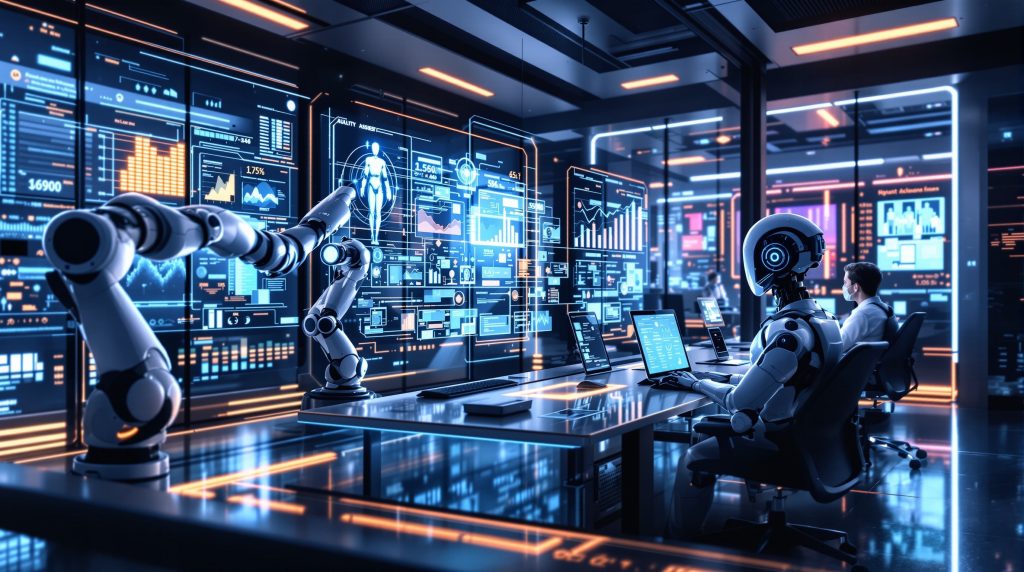
The most promising development in balancing speed and quality is the emergence of AI-human hybrid teams. These collaborative structures leverage AI’s computational power and pattern recognition capabilities while maintaining human strategic oversight and creative problem-solving.
In these hybrid teams, AI handles routine coding tasks, automated testing, and pattern-based debugging, while humans focus on architecture decisions, user experience considerations, and complex problem-solving that requires contextual understanding. This division of labor allows for both rapid development and thoughtful quality assurance.
The result is trust and efficacy at scale—teams can move quickly because they have confidence in their AI-powered quality assurance processes, and they can maintain quality because human oversight ensures that speed doesn’t compromise strategic thinking.
Transforming Your Development Approach
The integration of AI in both development and quality assurance isn’t just about adopting new tools—it requires a fundamental shift in how teams think about the relationship between speed and quality. Instead of viewing them as competing priorities, successful teams are learning to see them as complementary capabilities enabled by intelligent automation.
The organizations that will thrive in this new landscape are those that embrace AI-augmented development processes while simultaneously investing in comprehensive, automated quality assurance systems. They understand that in a world where AI can generate code at machine speed, the competitive advantage lies not just in how fast you can build, but in how reliably you can build at that speed.
As we move forward, the question isn’t whether AI will transform software development and quality assurance—it’s how quickly your team will adapt to leverage these capabilities. The future belongs to those who can harness AI to achieve both unprecedented development speed and uncompromising quality standards.