
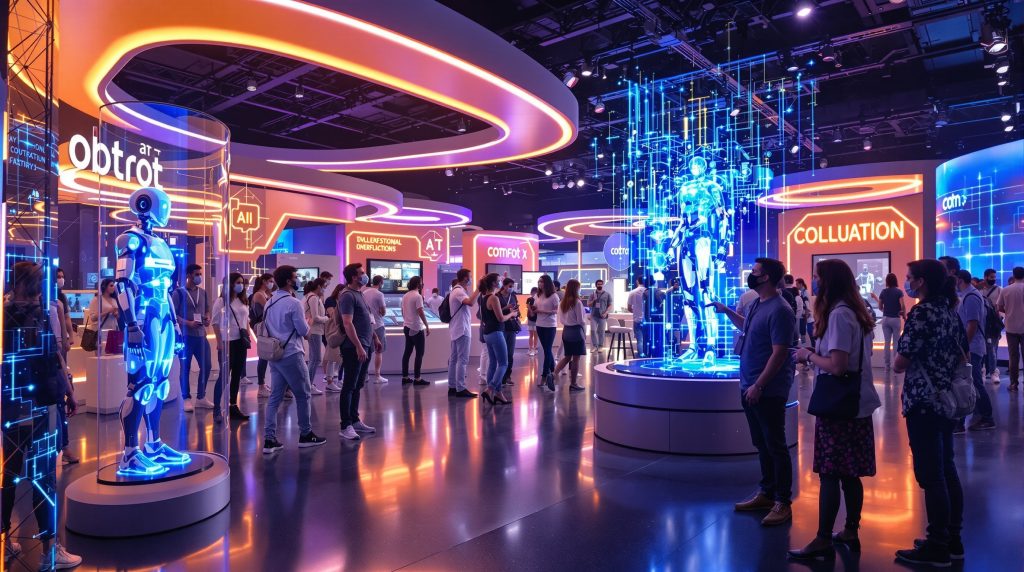
While headlines scream about ChatGPT and automation threats, a quieter technological revolution is unfolding in laboratories, factories, and homes across the globe. This isn’t about the AI everyone’s talking about—it’s about the sophisticated, interconnected systems that are silently reshaping how we live, work, and interact with our environment.
The Rise of Versatile Robotics
Forget the clunky industrial robots confined to factory floors. Today’s humanoid and quadruped robots are breaking free from their cages, literally and figuratively. Companies like Boston Dynamics, Tesla, and emerging startups are creating machines that navigate human environments with unprecedented grace and intelligence.
These robots aren’t just mechanical marvels—they’re becoming integral components of adaptive AI ecosystems. A humanoid robot in a warehouse doesn’t just move boxes; it learns from human colleagues, adapts to changing layouts, and even predicts maintenance needs. Meanwhile, quadruped robots are patrolling construction sites, inspecting infrastructure, and venturing into dangerous environments where human safety is paramount.
What makes this revolution particularly significant is the emphasis on nuanced applications. Rather than replacing humans wholesale, these robots are designed to complement human capabilities, handling repetitive tasks while humans focus on creative and strategic work.
Industrial AI Goes Independent
Perhaps one of the most underreported developments is the shift toward self-reliant industrial AI systems. While consumer AI relies heavily on cloud computing, industries dealing with critical operations—construction, aviation, energy—are embracing locally processed AI.
This transformation is driven by necessity. When a construction crane’s AI system needs to make split-second safety decisions, it can’t afford to wait for a response from a distant server. Edge computing and local processing ensure that these systems operate in real-time, maintaining both safety and performance even when internet connectivity fails.
Aviation exemplifies this trend perfectly. Modern aircraft are essentially flying computers, with AI systems monitoring everything from engine performance to weather patterns. These systems process terabytes of data locally, making autonomous adjustments that enhance safety and fuel efficiency without relying on ground-based servers.
Beyond the Smartphone: The Next Personal Tech Revolution
The smartphone era is approaching its twilight, and the next chapter is already being written. Phone-free smart glasses and integrated wearables are pioneering a future where technology becomes truly seamless with our daily lives.
Companies like Meta, Apple, and startup innovators are developing smart glasses that provide augmented reality overlays, real-time translation, and contextual information—all without reaching for a phone. These devices represent a fundamental shift toward ambient computing, where technology anticipates our needs rather than waiting for explicit commands.
The implications extend beyond convenience. Imagine smart glasses that can provide real-time medical information to doctors during surgery, or construction workers receiving instant safety alerts and blueprint overlays while on the job site. This isn’t science fiction—prototypes are already being tested in professional environments.
The Automotive Intelligence Revolution
While Tesla dominated headlines with its autonomous driving promises, the real automotive revolution is happening at a deeper level. AI integration in vehicles now extends far beyond navigation and safety systems.
Modern vehicles are becoming rolling AI platforms that learn driver preferences, predict maintenance needs, and optimize performance based on real-time conditions. Voice assistants in cars are evolving from simple command-response systems to contextually aware companions that understand natural conversation and can anticipate needs based on driving patterns and destinations.
The most exciting developments involve vehicle-to-everything (V2X) communication, where cars share information with other vehicles, traffic infrastructure, and even pedestrians’ smartphones. This creates a networked intelligence that can prevent accidents before they happen and optimize traffic flow in ways impossible with human drivers alone.
Invisible Innovation in Everyday Life
Perhaps the most profound aspect of this hidden revolution is how technology is becoming invisible in our daily routines. The most successful innovations are those we stop noticing—they simply make life better without demanding our attention.
Consider the emergence of smart pet care systems that monitor animal health and behavior, or wearables that track not just steps and heart rate, but stress levels, sleep quality, and early signs of illness. These devices represent a trend toward predictive wellness, shifting healthcare from reactive treatment to proactive prevention.
Smart home systems are evolving beyond simple automation to become genuinely intelligent environments. Modern systems learn family routines, adjust lighting and temperature based on circadian rhythms, and can even detect unusual patterns that might indicate health emergencies or security concerns.
The Convergence Effect
What makes this revolution particularly powerful is how these technologies are beginning to converge and amplify each other. A smart home doesn’t just control lights—it coordinates with your car’s AI to prepare your arrival, communicates with your wearables to optimize your environment for better sleep, and shares relevant information with your healthcare providers.
This interconnected ecosystem creates possibilities that none of these technologies could achieve in isolation. The result is a form of ambient intelligence that anticipates needs, prevents problems, and enhances human capabilities in subtle but profound ways.
Looking Forward: The Implications
This hidden revolution raises important questions about privacy, job displacement, and technological dependence. However, it also offers unprecedented opportunities for solving complex global challenges—from climate change to healthcare accessibility to urban planning.
The companies and individuals who recognize and adapt to these trends early will have significant advantages. More importantly, understanding these developments helps us make informed decisions about how we want technology to shape our future.
The AI and robotics revolution isn’t coming—it’s here. The question isn’t whether these changes will affect you, but how quickly you’ll recognize and adapt to the new reality they’re creating. The most significant transformations often happen quietly, and this technological evolution is no exception.