
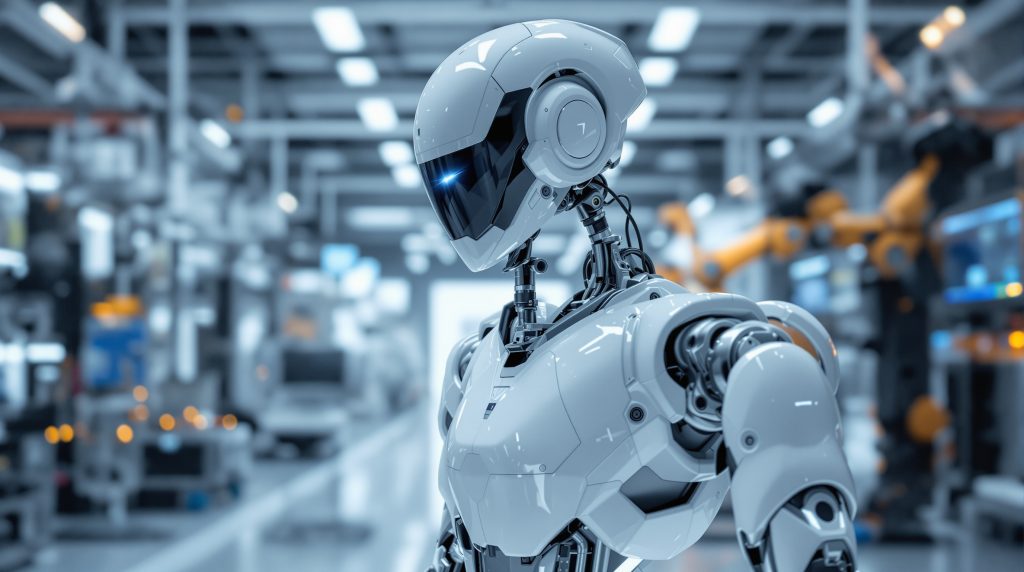
The age of humanoid robots is no longer a distant dream—it’s unfolding before our eyes. As we stand at the crossroads of technological innovation and practical implementation, the question isn’t whether robots will become part of our daily lives, but rather how quickly they’ll surpass human capabilities in various domains.
The Physical Revolution: Robots Achieving Human-Like Agility
Boston Dynamics has consistently pushed the boundaries of what we thought possible in robotics. Their Atlas robot has evolved from a clunky, cable-tethered machine to a sophisticated humanoid capable of performing gymnastics that would impress Olympic athletes. The robot’s ability to execute backflips, navigate complex terrain, and maintain balance under pressure represents more than just impressive party tricks—these capabilities demonstrate revolutionary advances in real-time processing, spatial awareness, and mechanical precision.
What makes these achievements particularly significant is the underlying technology. The Atlas robot’s movements require split-second calculations involving thousands of variables: joint angles, momentum, environmental feedback, and predictive modeling. This level of computational agility suggests that robots are rapidly approaching—and in some cases exceeding—human physical capabilities in controlled environments.
Where Ancient Wisdom Meets Artificial Intelligence
Perhaps one of the most fascinating developments comes from China, where Agibbot’s humanoid robots have been training alongside Shaolin monks, learning the ancient art of kung fu. This isn’t merely a publicity stunt—it represents a profound breakthrough in how robots can learn complex, culturally nuanced movements through observation and practice.
The implications are staggering. Traditional robot programming required extensive coding for each specific movement or task. These new systems demonstrate generalized learning capabilities, allowing robots to observe human behavior and adapt it to their own mechanical constraints. When a robot can learn kung fu from watching a monk, it suggests they can potentially master any human skill through similar observation-based learning.
From Laboratory to Marketplace: The Commercial Reality
The transition from research facilities to commercial applications is accelerating rapidly. Faraday Future’s entry into the humanoid robot market signals a crucial shift—robots are becoming economically viable for widespread deployment. Their focus on creating affordable, versatile robots for industrial, service, and security applications addresses real market needs rather than just technological curiosities.
This commercialization trend indicates that we’re moving beyond the experimental phase into practical implementation. Robots are being designed not just to demonstrate capabilities, but to solve specific problems in manufacturing, healthcare, customer service, and security. The return on investment is becoming clear enough that companies are willing to mass-produce these systems.
The Broader Implications: Reshaping Society and Work
These technological advances raise fundamental questions about the future of human employment and social structure. As robots become more capable, they’re not just replacing manual labor—they’re beginning to compete in areas that require creativity, precision, and complex decision-making.
The integration of humanoid robots into everyday operations will likely follow a pattern similar to other technological revolutions. Initially, they’ll complement human workers in dangerous or repetitive tasks. However, as their capabilities expand and costs decrease, they may begin to outperform humans in an increasing number of domains.
Navigating the Challenges Ahead
While the technological progress is impressive, it also presents significant challenges. Ethical considerations around robot rights, privacy concerns with AI-powered surveillance, and the economic displacement of human workers are issues that society must address proactively.
The question of robot consciousness and autonomy becomes more pressing as these machines become more sophisticated. If a robot can learn kung fu, adapt to new environments, and make independent decisions, at what point do we need to consider their rights and responsibilities?
The Timeline: Sooner Than Expected
Current trends suggest that widespread robot integration will occur within the next decade, not the next century. The convergence of advanced AI, improved battery technology, more sophisticated sensors, and decreasing production costs is creating a perfect storm for rapid adoption.
Industries ranging from healthcare to hospitality are already piloting humanoid robots. As these pilot programs demonstrate success, scaling up becomes inevitable. The robots of today are the early prototypes of tomorrow’s ubiquitous workforce.
The future with humanoid robots is neither dystopian nor utopian—it’s complex. These machines will likely excel in many areas while creating new opportunities in others. The key lies in how we choose to integrate this technology into society, ensuring that the benefits are widely distributed and the challenges are thoughtfully addressed.
As we witness robots performing backflips and learning ancient martial arts, we’re not just seeing technological progress—we’re glimpsing a future where the line between human and machine capabilities becomes increasingly blurred. The question remains: are we prepared for what comes next?