
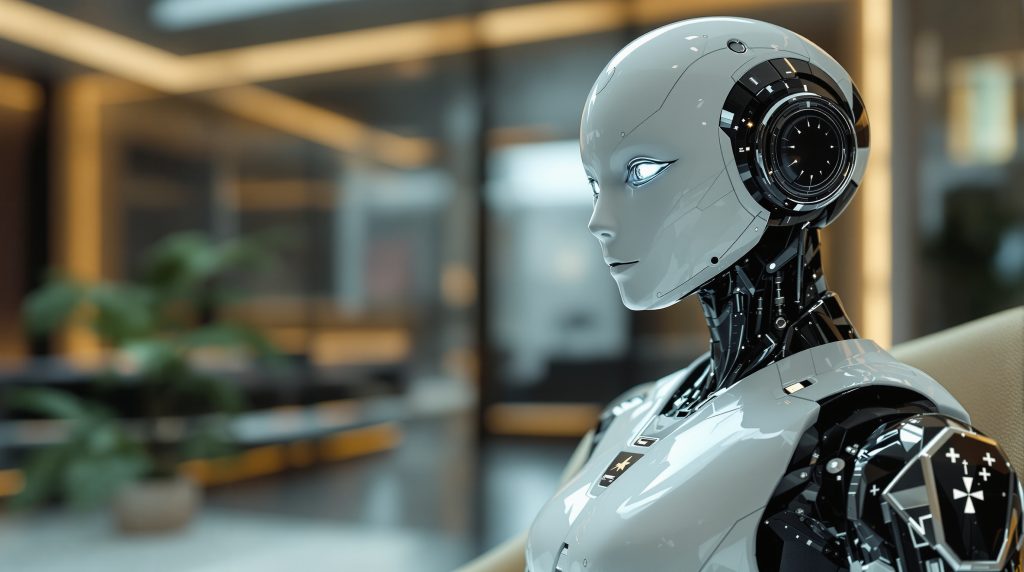
As we advance deeper into the 21st century, the line between science fiction and reality continues to blur. Humanoid robots are no longer confined to the pages of novels or the screens of blockbuster movies—they are walking, talking, and interacting in our world today. At the forefront of this technological revolution stands Moya, a creation by Droidup that challenges our fundamental understanding of what it means to be human and what role robotics will play in our future society.
The Dawn of Ultra-Realistic Robotics
Moya represents a quantum leap in biomimetic engineering, achieving levels of realism that were previously thought impossible. Unlike the clunky, obviously mechanical robots of the past, Moya’s design philosophy centers on perfect human emulation. Every detail, from facial expressions to body language, has been meticulously crafted to mirror human behavior with unprecedented accuracy.
The robot’s ability to capture and replicate micro-expressions—those fleeting facial movements that convey genuine emotion—marks a revolutionary advancement in human-robot interaction. These subtle cues, which humans unconsciously rely on for communication and trust-building, enable Moya to engage in more natural, intuitive conversations that feel genuinely authentic.
Engineering Perfection: The Technical Marvel
Standing at 1.65 meters tall and maintaining human-like body temperature, Moya’s physical specifications represent careful consideration of human psychology and comfort. These aren’t arbitrary measurements—they’re the result of extensive research into what makes humans feel at ease during interactions.
Perhaps most impressive is Moya’s 92% gait accuracy in replicating human movement. This achievement eliminates the jerky, robotic movements that have traditionally marked artificial beings, instead delivering fluid, natural motion that seamlessly integrates into social environments. The technical complexity required to achieve such lifelike movement cannot be overstated—it represents years of advancement in servo technology, AI processing, and mechanical engineering.
Versatility Through Innovation
Built upon the robust Walker 3 chassis, Moya’s modular design philosophy ensures adaptability across multiple sectors. In healthcare, such robots could provide consistent patient care, emotional support, and medical assistance without fatigue. Educational applications might include personalized tutoring, language learning, and interactive instruction that adapts to individual student needs.
The modular approach means that a single robot platform can be customized for specialized roles—from reception duties in corporate environments to therapeutic companions in assisted living facilities. This versatility makes humanoid robots economically viable across industries, potentially accelerating widespread adoption.
The Uncanny Valley Dilemma
Despite its technological achievements, Moya faces a significant psychological hurdle: the “uncanny valley” effect. This phenomenon occurs when artificial beings appear almost, but not quite, human—triggering feelings of unease or revulsion in observers. While some individuals marvel at Moya’s lifelike qualities, others experience discomfort precisely because of how realistic the robot appears.
This mixed reception highlights a crucial challenge for the robotics industry. As robots become more human-like, manufacturers must navigate the delicate balance between realism and acceptance. The question becomes: how human-like is too human-like?
Implications for Human Society
The emergence of robots like Moya forces us to confront fundamental questions about human interaction and social dynamics. If machines can replicate human behavior with near-perfect accuracy, what does this mean for authentic human connection? Will we become more comfortable interacting with predictable, programmable beings than with unpredictable humans?
There are both promising opportunities and legitimate concerns. On the positive side, humanoid robots could address labor shortages, provide consistent care for vulnerable populations, and offer companionship to those experiencing isolation. However, we must also consider potential negative impacts on employment, human skill development, and social bonding.
Looking Toward Tomorrow
The future of humanoid robots in human society remains an open question, but early indicators suggest significant transformation ahead. As technology continues advancing and costs decrease, these sophisticated machines will likely become increasingly common in our daily lives.
Success will depend not just on technical capabilities, but on our collective ability to integrate these technologies thoughtfully and ethically. We must establish frameworks that maximize benefits while protecting human values and social structures.
Moya and robots like it represent more than technological achievement—they represent a mirror reflecting our own humanity back at us. As we stand at this crossroads, the question isn’t simply whether humanoid robots are the future of human interaction, but rather: what kind of future do we want to create together?
The conversation has only just begun, and it will require input from technologists, ethicists, policymakers, and society as a whole to navigate this brave new world responsibly.