
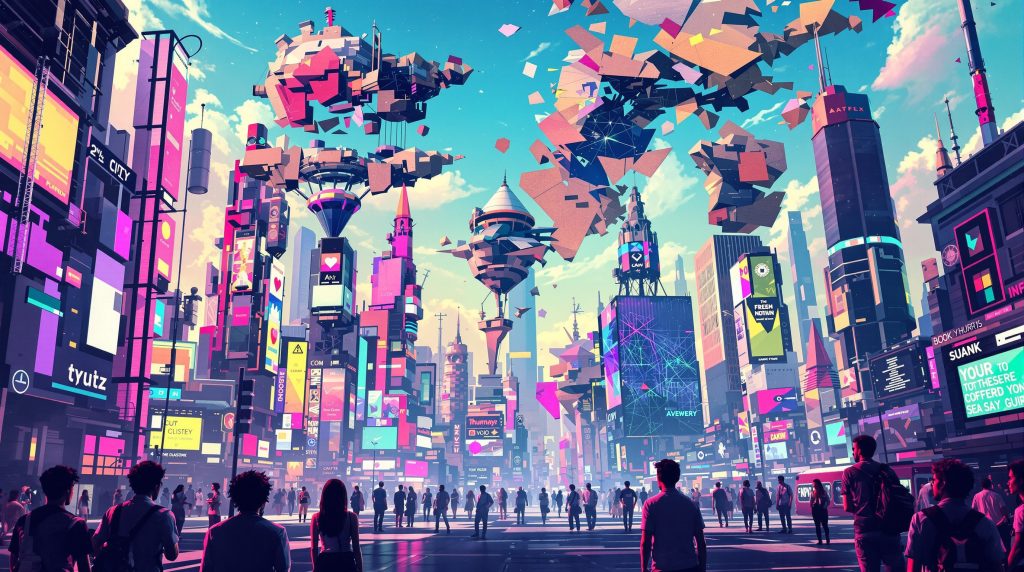
The digital landscape is experiencing a profound transformation that many of us encounter daily without even realizing it. Artificial Intelligence has quietly revolutionized content creation, evolving from a novel curiosity to an indispensable tool that seamlessly integrates into our digital experiences. What was once easily identifiable as “artificial” now blends so naturally with human-created content that the lines have become virtually invisible.
The Silent Revolution in Digital Content
The most remarkable aspect of AI’s evolution in content creation isn’t just its technical advancement—it’s how undetectable it has become. Unlike the early days when AI-generated images were plagued with obvious distortions and uncanny valley effects, today’s AI systems produce content that rivals professional human work. This seamless integration represents a fundamental shift in how we consume and interact with digital media.
The transformation didn’t happen overnight. Through countless iterations and refinements, AI algorithms have learned to master the subtle nuances that make content feel authentic. From the natural flow of shadows in generated images to the realistic movement patterns in AI videos, these systems now understand the microscopic details that our brains subconsciously recognize as “real.”
Continuous Innovation: Small Steps, Giant Leaps
The secret to AI’s success in content creation lies in its approach to improvement. Rather than dramatic overhauls, continuous small enhancements have gradually elevated the quality of AI-generated content to unprecedented levels. Each update brings subtle refinements—better texture rendering, more accurate facial expressions, improved color consistency—that collectively create a dramatic improvement in realism.
This iterative approach has proven particularly effective because it allows AI systems to address specific weaknesses without disrupting existing strengths. The result is a steady progression toward perfection that has caught many industries off guard with its rapid advancement and practical applicability.
Industry Leaders Driving Change
Companies like Higsfield are at the forefront of this revolution, demonstrating how innovative approaches can transform entire workflows. Their contribution to AI content creation extends beyond mere technical improvements—they’ve fundamentally reimagined how content creators approach their craft. By simplifying complex processes and enhancing output continuity across platforms, they’ve set new benchmarks for what’s possible in AI-assisted production.
What makes Higsfield’s approach particularly noteworthy is their focus on workflow integration. Rather than creating standalone AI tools, they’ve developed systems that seamlessly fit into existing production pipelines, making advanced AI capabilities accessible to creators regardless of their technical expertise.
Cinematic Excellence Through AI
Perhaps nowhere is AI’s sophistication more evident than in cinematic applications. Features like Cinema Studio represent a quantum leap in AI’s understanding of visual storytelling. These systems don’t just generate images or videos—they apply advanced cinematic principles that have been refined over decades of filmmaking.
The integration of lighting theory, perspective continuity, and compositional rules into AI systems means that generated content now follows the same visual language that audiences have been trained to recognize as professional and believable. Lighting consistency across scenes, proper depth of field effects, and natural camera movement patterns all contribute to creating AI-generated content that feels genuinely cinematic.
The Broader Impact Across Industries
The implications of this AI revolution extend far beyond entertainment and media. In marketing, brands can now create personalized content at scale without sacrificing quality. Educational institutions are leveraging AI to create engaging visual materials that would have been prohibitively expensive to produce traditionally. Even small businesses can access professional-grade content creation tools that level the playing field with larger competitors.
The healthcare industry is using AI-generated visuals for patient education and medical training. Architecture firms are creating realistic renderings of proposed buildings. The applications are as diverse as they are transformative, touching virtually every sector that relies on visual communication.
Looking Toward the Future
As we stand at this inflection point, it’s clear that we’re witnessing more than just technological advancement—we’re experiencing a fundamental shift in how content is conceived, created, and consumed. The undetectable nature of modern AI content raises important questions about authenticity, creativity, and the future role of human creators in the digital landscape.
However, rather than replacing human creativity, AI appears to be amplifying it. The most successful applications of AI in content creation are those that enhance human capabilities rather than replace them entirely. This collaborative approach suggests a future where human insight and AI capability work in harmony to produce content that neither could create alone.
The revolution is no longer coming—it’s here, quietly transforming our digital world one pixel at a time. As AI continues to evolve and integrate more seamlessly into our content creation processes, the only certainty is that the boundary between artificial and authentic will continue to blur, challenging our perceptions and expanding our creative possibilities in ways we’re only beginning to understand.