
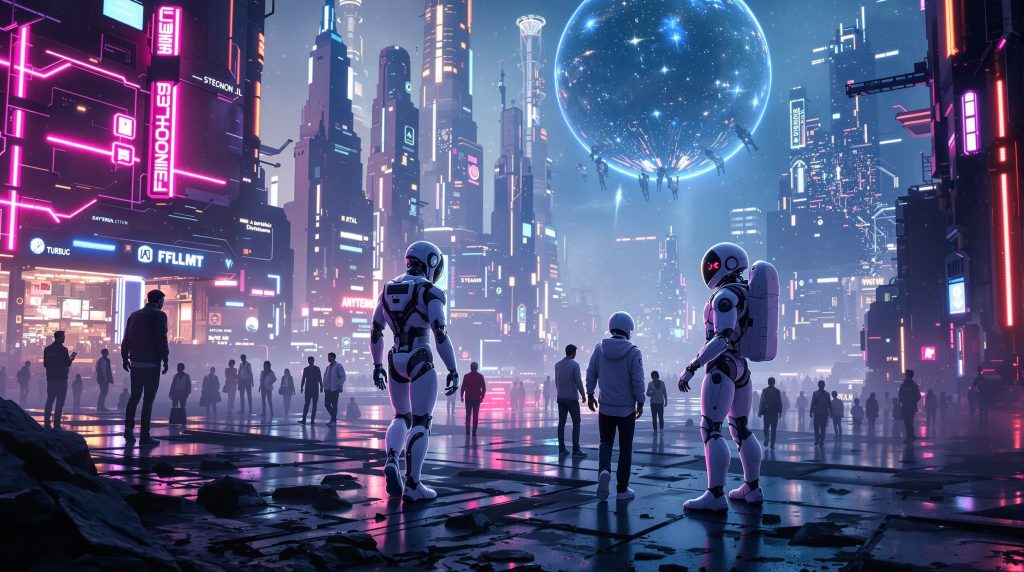
The age of artificial intelligence and robotics is no longer a distant dream—it’s unfolding right before our eyes. As we stand at the precipice of a technological revolution, the question isn’t whether AI will transform our lives, but rather how quickly we can adapt to its groundbreaking capabilities. Today’s innovations in robotics are reshaping industries, reimagining daily tasks, and pushing the boundaries of what we thought possible.
The Workplace Revolution: Humanoid Robots Take Center Stage
The modern workplace is experiencing a profound transformation, and at its heart lies the K2 Bumblebee robot. This remarkable innovation has introduced a game-changing feature: the straight knee gait technology. Unlike traditional robots that struggle with fluid movement and energy consumption, the K2 Bumblebee represents a quantum leap in robotic mobility and efficiency.
In dynamic environments like warehouses and distribution centers, this enhanced stability translates to real-world benefits. Workers and robots can now collaborate more seamlessly, with the K2 Bumblebee navigating complex spaces while maintaining optimal energy usage. This advancement addresses one of the most significant challenges in industrial robotics: creating machines that can adapt to unpredictable environments while maintaining consistent performance levels.
Breaking Through Human Limitations: The Cognitive Revolution
Perhaps one of the most exciting developments in modern robotics is the emergence of systems that can overcome traditional human limitations. XSquare’s Wall OSS stands as a testament to how far artificial intelligence has progressed in addressing fundamental robotic challenges.
The system tackles two critical areas that have long plagued robotic development: learning retention and system flexibility. Traditional robots often struggle with retaining knowledge across different tasks or adapting their learned behaviors to new situations. Wall OSS changes this paradigm by implementing advanced reasoning capabilities that mirror human cognitive processes.
This breakthrough means robots can now learn from one experience and apply that knowledge to entirely different scenarios, much like humans do. The implications extend far beyond industrial applications, potentially revolutionizing fields such as healthcare, education, and personal assistance.
From Kitchen to Cosmos: Robots as Daily Life Companions
The integration of robots into our daily lives has reached unprecedented levels of sophistication. Jack Ma’s humanoid chef, R1, exemplifies how artificial intelligence is revolutionizing even the most traditional human activities. This culinary robot doesn’t simply follow pre-programmed recipes; it demonstrates precise knife skills, temperature control, and timing that rivals professional chefs.
The R1’s capabilities extend beyond mere food preparation. It represents a new class of domestic robots that can understand complex instructions, adapt to different cooking styles, and even learn family preferences over time. This level of personalization and adaptability marks a significant step toward truly intelligent home assistance.
Meanwhile, NASA’s exploration of artificial astronauts pushes the boundaries of what robots can achieve in extreme environments. These potential space-faring robots could handle dangerous tasks in the vacuum of space, reducing risks to human astronauts while extending our capability to explore and work in hostile environments.
Safety, Efficiency, and the Future of Human-Robot Collaboration
The common thread connecting all these innovations is their focus on improving safety and operational efficiency. Rather than replacing human workers entirely, these advanced robots are designed to work alongside humans, handling dangerous, repetitive, or highly precise tasks that can benefit from artificial intelligence’s unique capabilities.
In manufacturing, robots can work in environments that would be hazardous to humans, from extreme temperatures to toxic chemical exposure. In space exploration, artificial astronauts could perform extravehicular activities without risking human lives. In domestic settings, robotic assistants can help elderly individuals maintain independence while ensuring their safety and well-being.
Industry Transformation Across Sectors
The ripple effects of these robotic advances are being felt across numerous industries. Healthcare facilities are exploring robotic assistants for patient care and surgical procedures. Agriculture is embracing autonomous systems for planting, harvesting, and crop monitoring. The construction industry is investigating robotic solutions for dangerous building tasks and precision assembly work.
Transportation continues to evolve with autonomous vehicles becoming more sophisticated and reliable. Retail environments are integrating robotic systems for inventory management, customer service, and delivery operations. Even creative industries are beginning to explore how AI and robotics can enhance artistic expression and content creation.
Challenges and Considerations for the Future
While the potential of AI and robotics is immense, several important considerations must guide their development and implementation. Ethical implications surrounding job displacement require careful planning and retraining programs. Privacy concerns related to AI systems that learn and adapt from human behavior need robust safeguards and transparent policies.
Technical challenges also remain, including improving robot reliability in unpredictable situations, developing better human-robot interfaces, and ensuring cybersecurity in increasingly connected robotic systems. The cost of implementation and maintenance continues to be a barrier for smaller organizations and developing regions.
The Road Ahead: Embracing the Robotic Renaissance
As we look toward the future, it’s clear that AI and robotics are ready to revolutionize our lives today, not tomorrow. The innovations we’re witnessing—from the K2 Bumblebee’s enhanced mobility to XSquare’s cognitive breakthroughs, from culinary robots to artificial astronauts—represent just the beginning of a technological renaissance that will reshape how we work, live, and explore.
The question facing individuals, businesses, and societies is not whether to embrace these changes, but how to adapt and thrive alongside our new robotic partners. Success in this new era will depend on our ability to harness the strengths of both human creativity and artificial intelligence, creating a future where technology amplifies human potential rather than replacing it.
The revolution is here, and it’s time to be part of shaping how robotics will transform not just industries, but the very fabric of our daily lives. The future is not just approaching—it’s already knocking at our door.